September 29, 2026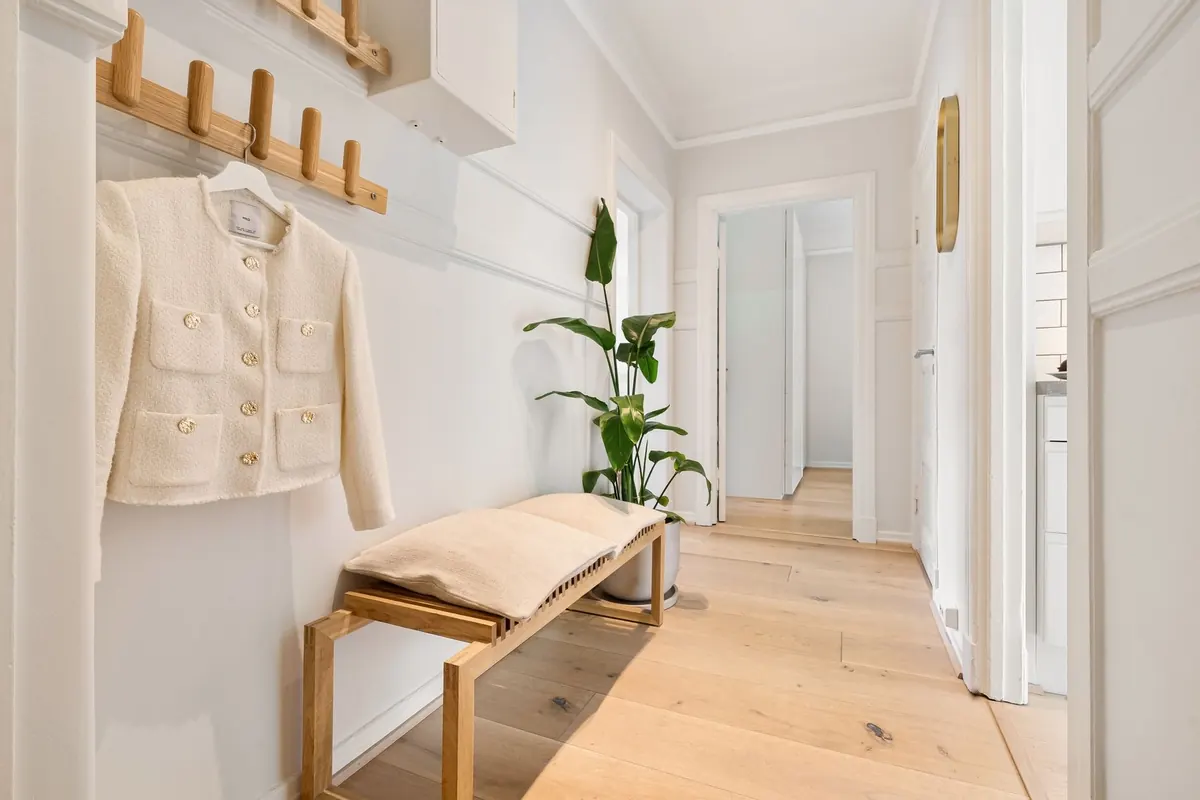
Every home has a spot where the day arrives before you do: the front door. Coats land on the bannister, wellies tip sideways, the dog's lead coils on the floor and somewhere underneath it all is a wet umbrella slowly ruining the paintwork. A boot room is the answer, but most UK hallways are barely a metre wide and already home to the meter cupboard, the pushchair and a pile of post. The good news is that a boot room is a system rather than a room. Get the zoning and the kit right and a narrow hall can handle everything a muddy walk or a wet school run throws at it.
Start with an honest audit of what lands in your hall
Stand in the doorway and watch what happens over three days. Don't tidy as you go; just note it. Most households find the same six or seven items: everyday coats, school bags, one pair of boots each, dog lead and harness, keys, an umbrella, and something that should have gone upstairs a fortnight ago.
That last category is the real problem. A drop zone fails when it is expected to store things as well as hold them. Anything worn or carried less than once a week does not belong by the front door. Spare coats, out-of-season boots, the big golf umbrella: these go in a wardrobe, an under-stairs cupboard or a lidded box on top of a wardrobe. What stays in the hall is what leaves the house most days.
Think in three bands: floor, waist, overhead
Narrow hallways work when you use height instead of width. Divide the wall into bands and give each one a job.
- Floor to knee height: boots, shoes, the dog's bowl if it lives there, a shallow basket for reusable bags. Nothing tall enough to trip over.
- Waist to shoulder height: the bench or the fold-down seat, and the hooks that get used daily. This is the busiest band, so keep it clear of anything decorative.
- Above head height: a single shelf for bulky, occasional items such as spare dog towels, a picnic blanket or sun hats. Deep enough for a storage box, shallow enough that you do not duck past it.
If your hall is genuinely wide enough for only one person to pass, keep a clear walking line down the middle and put everything into the wall. Measure that line before you buy anything, then measure it again.
The kit that earns its place
You do not need much, but the pieces you choose should be doing at least two jobs.
- A shallow bench with lift-up storage. Around 30–35cm deep is enough to sit on and tuck away hats and gloves. A bench that is too deep eats the hallway.
- A boot tray with a lip. A cheap gravel tray or a lipped plastic tray under the boots catches grit and drips, and can be lifted outside to shake out.
- Hooks at two heights. Adult coats at shoulder height, children's at their shoulder height, not yours. Children hang up what they can reach.
- A slim shoe cabinet. Look for one no deeper than your skirting allows, and check it clears the front door's swing.
- An over-door rack for the inside of the under-stairs or coat cupboard door. That dead space holds scarves, spare leads and dog towels.
- A washable mat and a runner. Something you can put in the machine beats anything you have to scrub.
- One lidded box for the things you do not want on show: pegs, poo bags, a spare pair of gloves.
Wet coats, wellies and umbrellas
Water is what wrecks hallways: damp plaster, swollen skirting, that faint smell of wet dog. Deal with it at the point of entry rather than the point of storage.
Wellies should sit in a tray, not against a wall. Turn the toes outwards so the insides dry, and if they are proper wellies, a rolled-up newspaper inside overnight helps them keep their shape and dry from within. Coats go on hooks above the tray, never on the bannister, so drips land on a hard surface. If you have a porch, a short length of guttering fixed at boot height makes a surprisingly good welly rack.
Umbrellas need air. Close them, shake them, and leave them open to dry somewhere out of the way, then put them back in the stand. Folding a wet umbrella and leaving it zipped shut is how you get a musty canopy and a rusty frame. A tall, narrow stand with a drip tray at the base takes up less floor space than you would think, and it stops umbrellas becoming a pile in the corner.
A quick drying corner
If you have a spare hook near a radiator or an airing cupboard, that is the one to use for soaked school coats. Rotate them: the dry one goes back to the hall, the wet one goes to the drying spot. It saves the hallway from becoming a permanent laundry.
A dedicated dog corner
Dog kit is the easiest thing to lose control of, because it is used several times a day and always in a hurry. Give it one place, however small. A shallow crate or basket on the floor holds the lead, harness and a treat tin. A hook at the exact height you reach for the lead stops it being dropped on the floor. Keep a towel for wet paws in the lidded box or in a small drawstring bag on the back of the door.
If muddy walks are a daily event, a small lidded bin for used bags near the door removes the temptation to leave them in a coat pocket until wash day.
Small, rented or awkward hallways
Renters can build the whole system without drilling a single hole. Over-door hook racks, a freestanding coat stand with a weighted base, a narrow bench that needs no fixing, and adhesive hooks rated for the weight you intend to hang. Test adhesive hooks with something light for a day before trusting them with a coat.
If the hallway really is too tight, stop trying to make it do everything. Put the actual boot room in the under-stairs cupboard or a nearby utility space, and let the hallway hold only what is on your body at that moment: one coat per person, one pair of shoes, keys and the lead. A tray by the door and a hook on the wall can be enough.
Keep it working with a two-minute reset
Systems fail because nobody empties them. Build a short routine: every evening, boots onto the tray, wet coats onto the drying hook, umbrellas open to dry, leads back in the basket. Once a week, lift the tray and rinse it, wipe the shelf, and check the lidded box for anything that needs washing or throwing away.
Twice a year, at the change of seasons, empty the whole thing. Winter gloves out, summer hats in, anything nobody has worn since last year goes to the charity bag. Keep one rule above all others: one coat in, one coat out. Do that, and a hallway the width of a doorway will still feel like it is working with you rather than against you.
Photo: Lisa Anna / Pexels